This chapter explains why two motors with the same power can have completely different lifetimes. RFQs are full of Class F, Class H, B-rise, S1, S3, SF 1.15, ambient 50 °C, PT100, PTC, bearing RTD, and space heater. Once you understand them, you can answer most technical questions without calling the factory.
REMEMBER Heat is the number-one enemy of an electric motor. Motors rarely fail because the electricity is 'too strong'; they fail because heat ages the insulation, breaks down the grease, and overheats the bearings. Almost everything in this chapter is about managing heat. |
6.1 Insulation class (IEC 60085)
The winding copper is coated in insulation. Without it, adjacent turns would short and the motor would burn instantly. The insulation's heat tolerance is graded into thermal classes defined in IEC 60085. These numbers are the maximum hot-spot temperature the insulation system can survive — not the temperature the motor normally runs at.
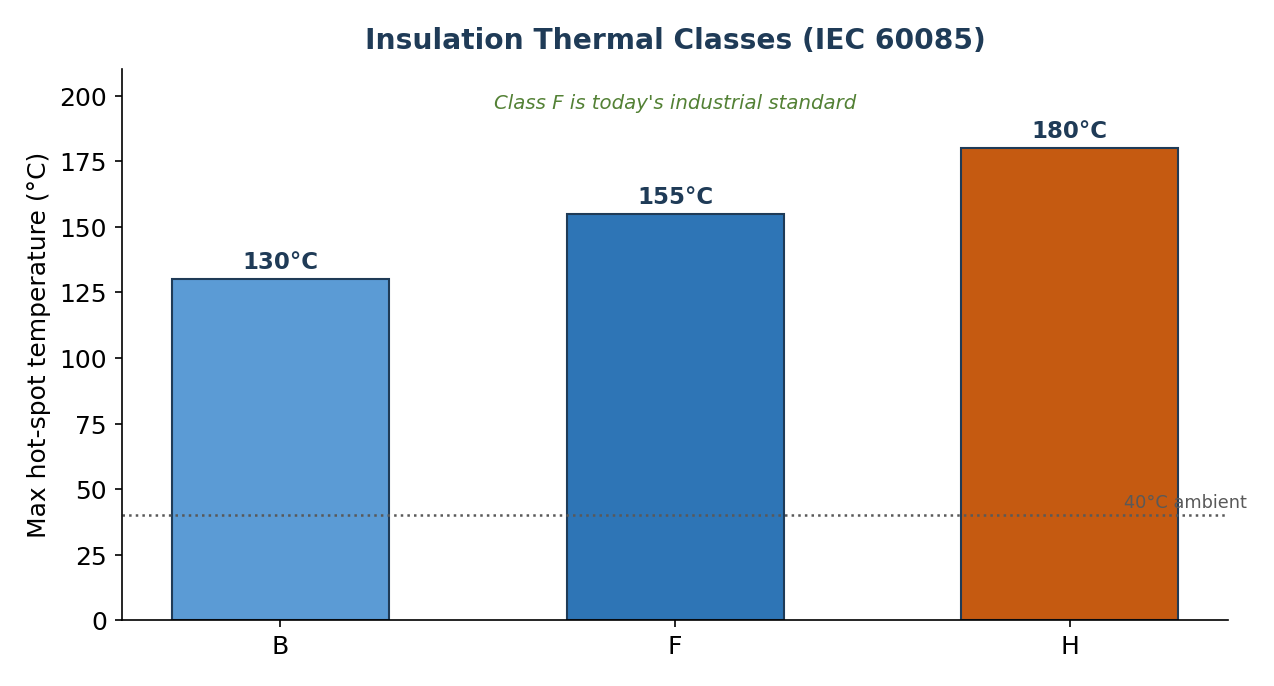
Figure 6.1 — Insulation thermal classes and their maximum hot-spot temperatures (IEC 60085).
Class |
Max hot-spot temperature |
Note |
B |
130 °C |
Older / lighter-duty designs |
F |
155 °C |
Today's industrial standard |
H |
180 °C |
Severe-duty and high-temperature service |
ANALOGY Insulation class is like the heat rating of cookware. A pan rated for 250 °C doesn't mean you cook at 250 °C every day — it means the pan survives spikes up to there. A Class F motor is rated to 155 °C, but a well-designed one runs much cooler, keeping margin in reserve. |
||
WATCH OUT If a customer specifies Insulation Class H, do not substitute Class F without written approval — they may be relying on the extra thermal capability for a hot or severe application. |
6.2 Temperature rise — and why 'F/B' is a quality signal
Temperature rise is how much the winding heats above the surrounding air at rated load — it is not the same thing as insulation class. If ambient is 40 °C and the winding reaches 120 °C, the rise is 80 K (Class B rise).
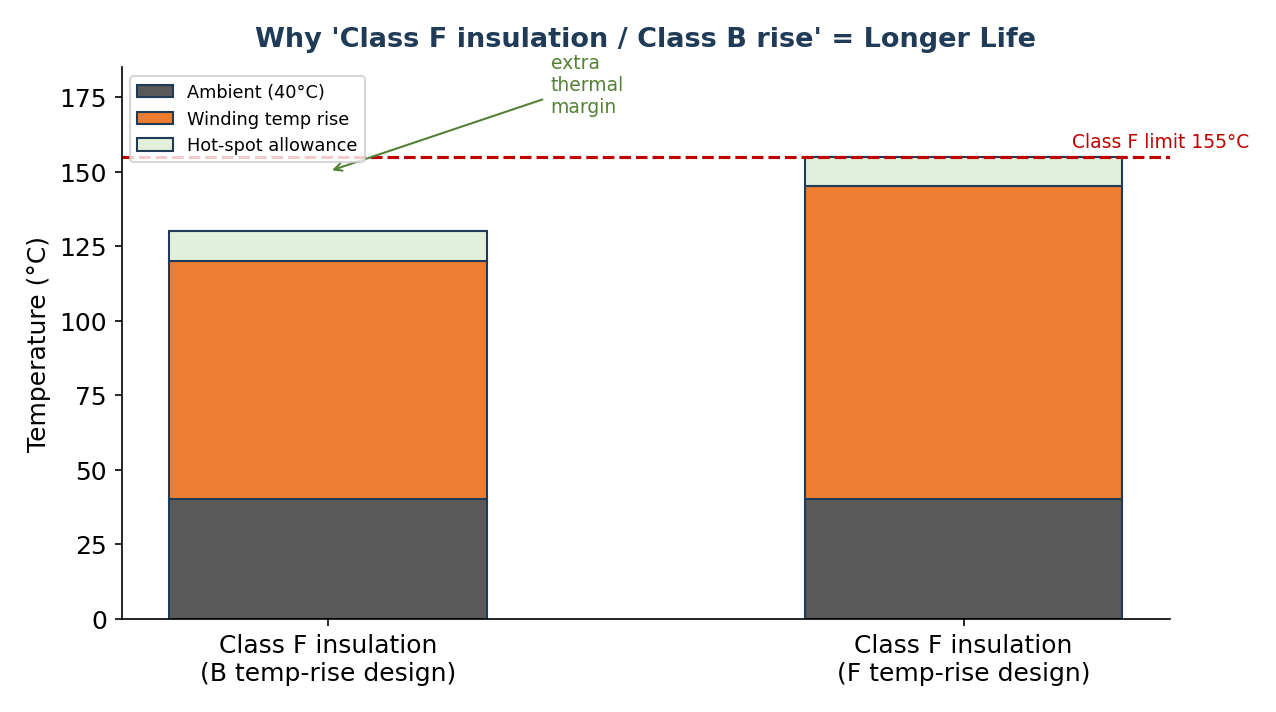
Figure 6.2 — A Class F motor designed to Class B rise keeps a large thermal margin in reserve.
A premium motor is often built with Class F insulation but only Class B temperature rise. It is insulated to survive 155 °C, yet designed so the winding only climbs to the lower Class B limit at rated load. The gap between the two is pure thermal margin.
REMEMBER “Class F insulation / Class B rise / S1” is a phrase worth recognising on sight. It signals a high-quality industrial motor with extra thermal margin — meaning longer life, better overload capability, and improved reliability. Saying so out loud tells an experienced customer that you understand motors. |
6.3 Ambient temperature and altitude
Standard motors assume 40 °C ambient and 1000 m altitude. If a customer states ambient = 55 °C, think immediately about a larger frame, derating, better cooling, or a higher insulation class. Above 1000 m the thinner air cools less effectively, so high-altitude sites (large projects sometimes quote 2300 m) may also need derating or special design.
6.4 Duty types (IEC 60034-1)
Duty describes how the motor is meant to run, and is standardised as S1–S10 in IEC 60034-1. Most industrial motors are S1, continuous duty.
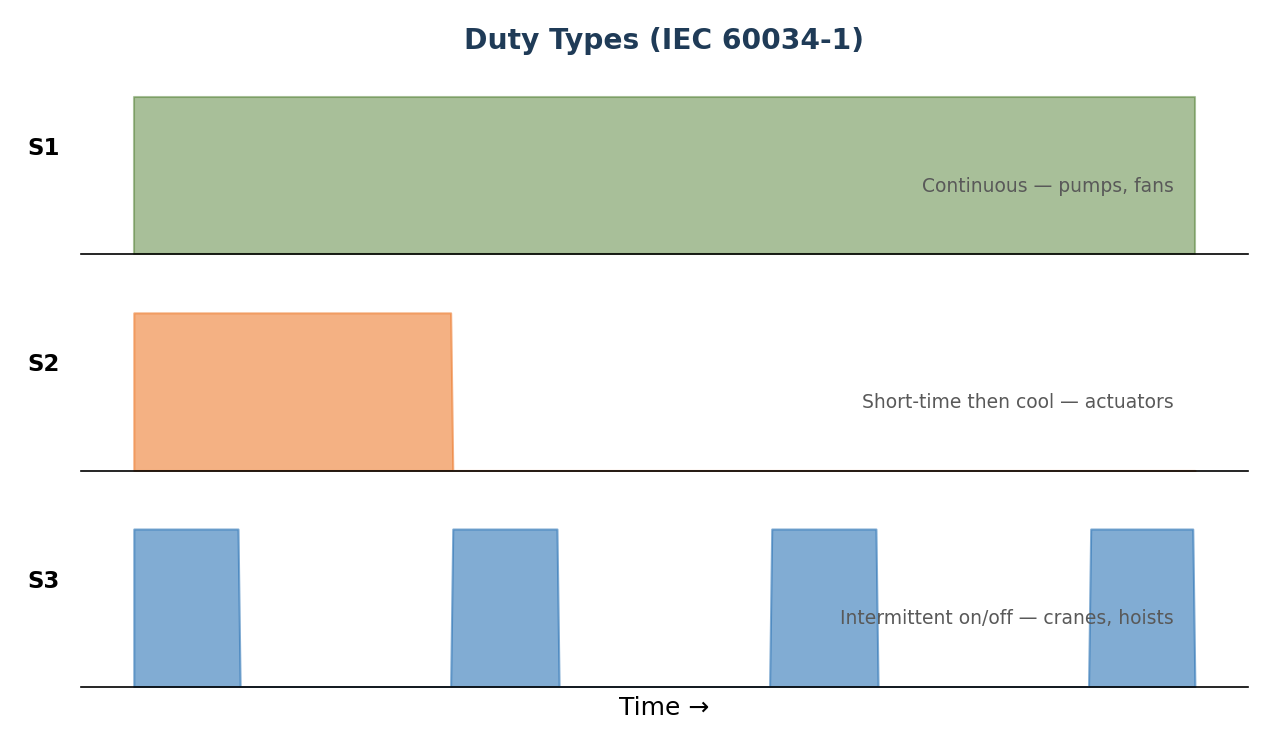
Figure 6.3 — The three duty types you will meet most often (IEC 60034-1 defines S1–S10).
Duty |
Meaning |
Typical applications |
S1 |
Continuous running at constant load |
Pumps, fans, compressors — most motors |
S2 |
Short-time: run, then stop to cool fully |
Actuators, some lifting equipment |
S3 |
Intermittent: repeated on/off cycles |
Cranes, hoists, door motors |
S4 / S5 |
Frequent starting; S5 adds electric braking |
High-cycling machinery |
6.5 Service factor (SF)
Service factor is mostly a NEMA concept. An SF of 1.15 means the motor can occasionally handle 15% above its rated output under the manufacturer's stated conditions — for example a 100 HP motor briefly carrying up to 115 HP, or, as ABB puts it, a 10 HP motor handling up to 11.5 HP for infrequent loads.
WATCH OUT Service factor is not a licence to run the motor permanently overloaded. Treating the SF as normal operating headroom shortens motor life. Use it only as the occasional margin the manufacturer intends. |
6.6 Thermal and bearing protection
PTC thermistors behave like an over-temperature switch: at a set winding temperature their resistance jumps and the controller trips the motor — simple and reliable. PT100 / RTD sensors instead report the actual temperature (e.g. 78 °C), so you can monitor trends; they are preferred in oil & gas, marine, and power-plant service. A thermostat is a basic on/off temperature switch. Large motors often add bearing RTDs, because bearings are one of the most common failure points and benefit from continuous monitoring.
6.7 Space heaters and why motors burn
A space heater prevents condensation while the motor is stopped: a motor left overnight forms internal moisture that attacks the insulation, and the heater keeps the winding dry. They are common on outdoor, marine, standby, and humid-climate motors.
Most failures trace back to heat. The classic chain is: overload → high current → heat → insulation damage → short circuit → failure. Other triggers include a blocked cooling fan, high ambient temperature, bearing failure, incorrect voltage, single-phasing (phase loss), and poor ventilation.
WORKED EXAMPLE RFQ: “30 kW, 400 V, 50 Hz, Class F, B-rise, S1, PT100, space heater, ambient 55 °C.” Read it as: a standard electrical rating, but a special ambient, temperature monitoring, and anti-condensation protection — a configured motor that needs manufacturer confirmation, not a plain stock item. |
Knowledge Check — Chapter 6
Does Class F mean the winding normally runs at 155 °C? Explain.
What is the difference between insulation class and temperature rise?
Why is 'Class F insulation, Class B rise' considered a good sign?
What does S1 duty mean, and which duty suits a crane?
What is the difference between a PT100 and a PTC thermistor?
Why is a space heater fitted, and on what kinds of motor?