RFQs are full of terms like TEFC, ODP, IP55, IC411, TENV, and WPII. Together they answer one question: where can this motor safely operate? The enclosure is the motor's protective shell — how it keeps the environment out and how it carries its own heat away. A motor for a clean office, a cement plant, a desert, and an offshore platform will not share the same enclosure.
5.1 Enclosure types
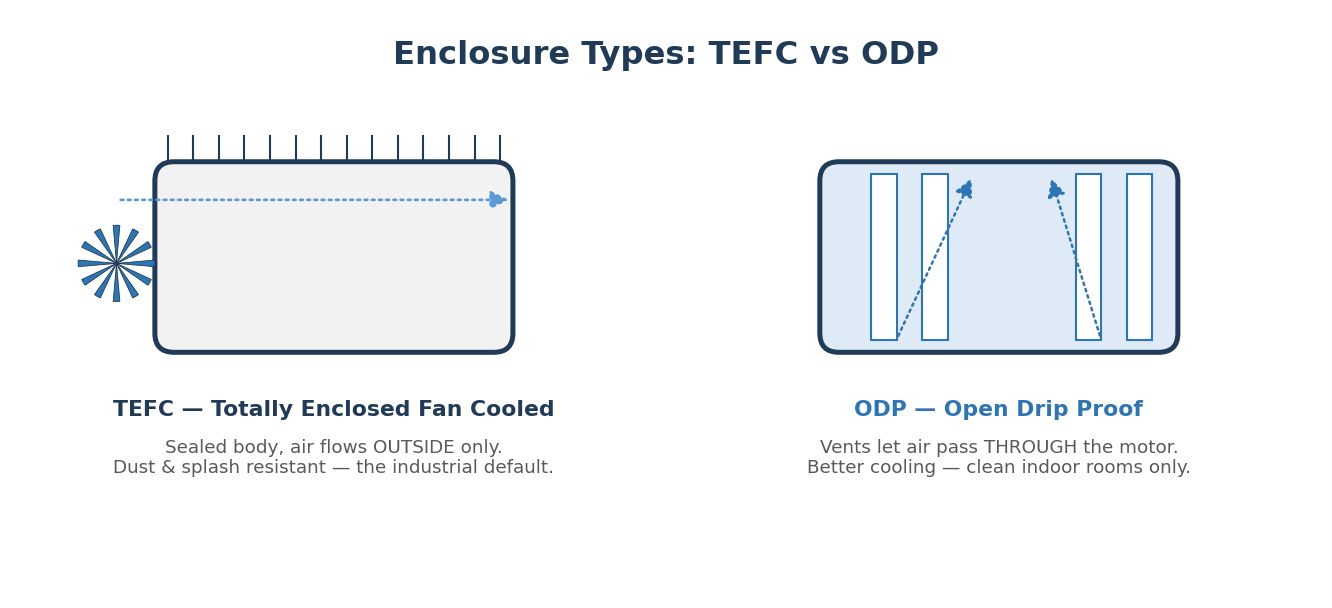
Figure 5.1 — TEFC keeps air outside the motor; ODP lets air pass through it.
TEFC — Totally Enclosed Fan Cooled is the industrial default. The body is sealed, an external shaft-mounted fan blows over finned surfaces, and air never passes through the windings. It is dust- and splash-resistant (with the right IP) and low-maintenance — the right answer for pumps, compressors, fans, conveyors, cement plants, non-hazardous oil & gas, and HVAC.
ODP — Open Drip Proof has ventilation openings and lets air flow through the motor, giving better cooling — but only in clean, dry indoor spaces such as electrical rooms, generator rooms, and machine rooms. TENV — Totally Enclosed Non-Ventilated has no fan and relies on natural cooling, used on small, low-power, low-speed machines. TEAO — Totally Enclosed Air Over has no shaft fan and relies on the airflow of the equipment it drives, typical of HVAC air handlers and condenser fans.
WATCH OUT Never specify ODP for cement plants, outdoor/rain exposure, dusty areas, or washdown duty — the open vents will let contamination straight into the windings. And a TEFC and an ODP motor of the same kW/voltage/speed are different designs, not substitutes. |
STANDARDS REFERENCE Explosion-proof / flameproof motors are a category of their own for hazardous areas where flammable gas or dust may be present (oil & gas, refineries, LNG, petrochemicals). They are certified to schemes such as ATEX and IECEx — never offer a standard TEFC motor where an Ex motor is required. Hazardous-area certification is covered in Chapter 8. |
5.2 IP rating — Ingress Protection (IEC 60529)
The IP code tells you how well the enclosure resists solids (dust) and water. The format is two digits: the first is solid-object/dust protection, the second is water protection. The standard behind it is IEC 60529.
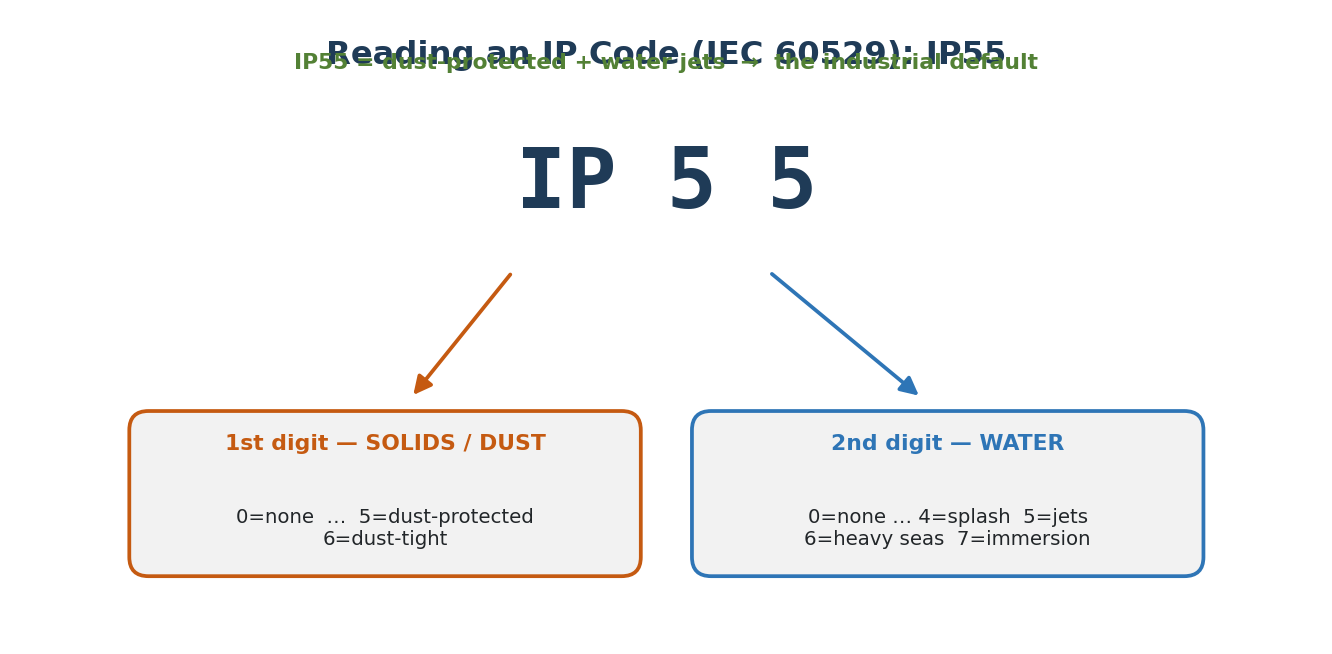
Figure 5.2 — Reading an IP code such as IP55 (IEC 60529).
1st digit — solids / dust |
2nd digit — water |
4 — objects > 1 mm |
4 — splashing water from any direction |
5 — dust-protected (limited ingress) |
5 — water jets |
6 — dust-tight (no ingress) |
6 — powerful jets / heavy seas |
— |
7 — temporary immersion |
WORKED EXAMPLE IP55 = dust-protected + protected against water jets — which is exactly why it is the industrial default. For outdoor, marine, cement, washdown, or very dusty sites, you may step up to IP56, IP65, or IP66. |
5.3 Cooling methods — IC codes (IEC 60034-6)
Cooling methods describe how the motor removes heat and are defined in IEC 60034-6. Three you will meet constantly:
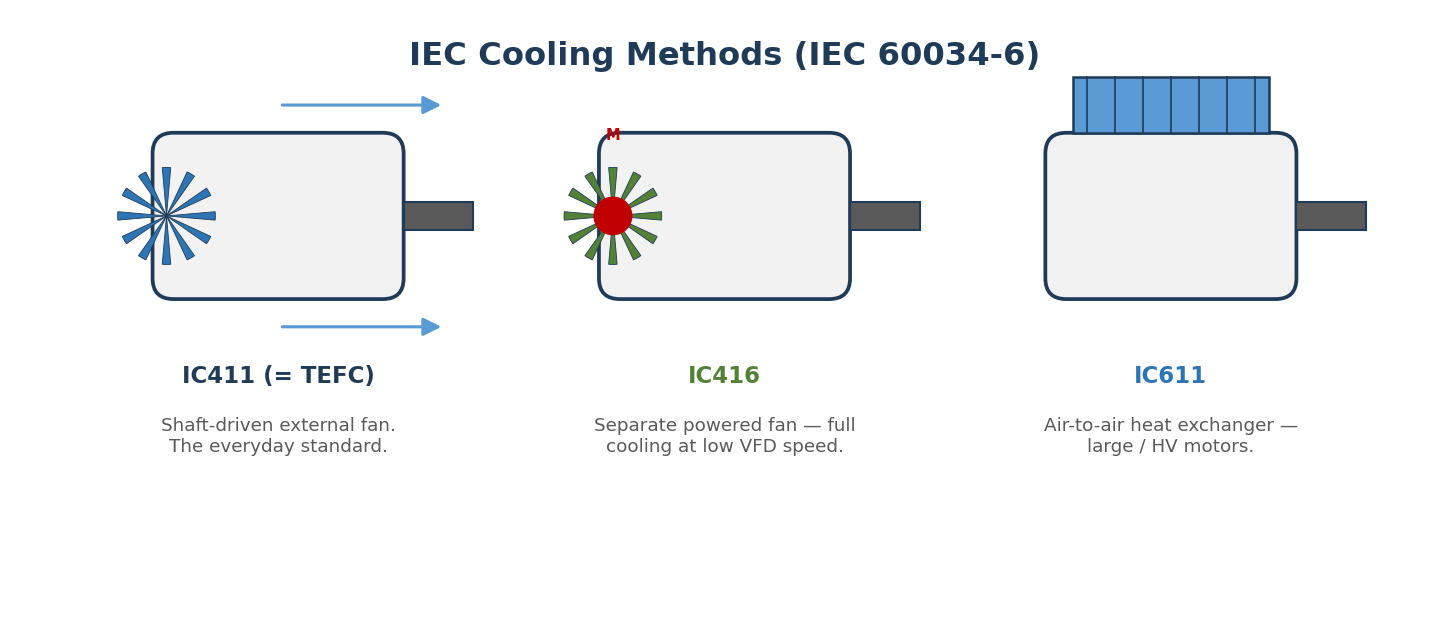
Figure 5.3 — The three cooling arrangements you will quote most (IEC 60034-6).
Code |
How it cools |
When it is used |
IC411 |
Totally enclosed, external shaft-mounted fan, finned frame — this is what people mean by 'TEFC' |
Most low-voltage industrial motors |
IC416 |
Like IC411 but a separately powered fan, independent of motor speed |
VFD / variable-speed and heavy-duty: full cooling even at very low speed |
IC611 |
Air-to-air heat exchanger, no fan blowing directly on the frame |
Large and high-voltage motors in clean environments |
For very large machines and demanding sites you may also see IC81W, a water-cooled heat exchanger, used in steel plants, marine, and very large motors.
SALES TIP If a customer runs a standard TEFC (IC411) motor slowly on a VFD, its shaft fan also slows and cooling drops. Offer IC416 forced cooling, or an inverter-duty motor rated for the speed range, before the motor overheats. |
5.4 Environment factors that change the motor
Ambient temperature: the standard rating is 40 °C. A hotter site (say 55 °C) may force a larger frame, derating (reduced output), better cooling, or a higher insulation class.
Altitude: the standard rating is 1000 m. Thinner air above that cools less effectively and can require derating or special design.
Corrosion protection: RFQs may specify paint/coating systems C3, C4, or C5 by corrosion severity; oil & gas and marine projects often demand C4 or C5.
Anti-condensation: space heaters (110 V / 220 V / 230 V) keep stopped motors dry — common outdoors, in marine, in humid climates, and on standby pumps.
5.5 Thermal protection options
Three devices recur in RFQs: PT100 / RTD sensors measure the actual temperature of windings or bearings and are preferred for monitoring; PTC thermistors act as an over-temperature switch for protection; and a thermostat is a simple temperature switch that trips the motor. These are explored further in Chapter 6.
5.6 Choosing an enclosure — and the questions to ask
When the enclosure is not stated, ask: indoor or outdoor? dusty? washdown? hazardous area? ambient temperature? altitude? VFD-driven? marine? corrosive atmosphere? The answers decide whether a standard stock motor will do or a special design is required.
WORKED EXAMPLE RFQ: “250 HP, 4000 V, 60 Hz, 2-pole, TEFC, IC411, IP55, Class F, CSA, Class I Zone 2.” Read it at a glance: a high-voltage motor, TEFC/IC411 cooling, IP55, hazardous-area (Zone 2), CSA certification required — definitely not a standard warehouse motor, and an engineered enquiry that needs datasheet, drawing, and compliance review. |
Knowledge Check — Chapter 5
What is the difference between TEFC and ODP?
What does IP55 mean, digit by digit?
Why would a customer choose IC416 instead of IC411?
Which enclosure suits a dusty cement plant?
Which enclosure type and certification family is required in a hazardous oil & gas area?
A customer specifies ambient 55 °C — what should you think before quoting a standard motor?