This chapter looks at the physical parts of a common industrial three-phase squirrel-cage induction motor: what each part is, what it does, and — crucially for a seller — what it means in quotations, spare-parts lists, and replacement requests. WEG's motor specification guide describes the same machine as essentially two main electromagnetic parts, the stator and the rotor, with the stator carrying the frame, the laminated core, and the three-phase winding.
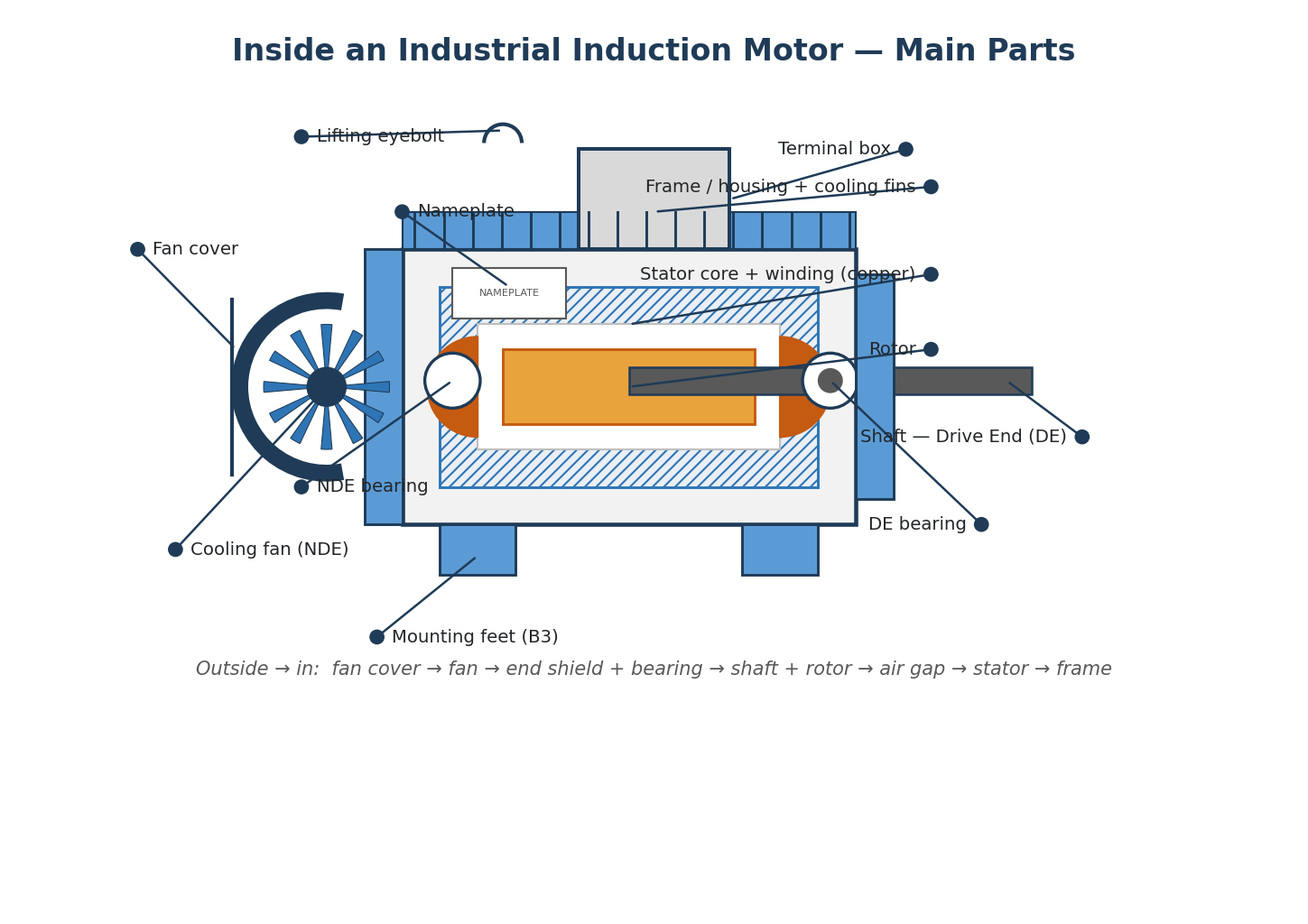
Figure 3.1 — Cutaway reference for the parts discussed in this chapter.
3.1 The motor has two worlds
It helps to split the motor into an electrical world and a mechanical world. The electrical parts (stator core and winding, rotor, terminal block) create the magnetic force that produces rotation. The mechanical parts (frame, end shields, bearings, shaft, fan, fan cover, feet/flange) support, protect, cool, and transmit that rotation to the load.
3.2 Stator — the electrical heart
The stator is the fixed, non-rotating part. It holds the laminated stator core and the three-phase winding. Connect it to three-phase AC and the winding produces a rotating magnetic field, which is what makes the rotor turn. Sales language that attaches to the stator includes winding, insulation class, RTD/PT100 temperature sensors, and space heaters.
WATCH OUT If a customer asks for winding RTDs, a space heater, or Class H insulation, you are no longer dealing with a plain stock motor. These are factory-configured options — check lead time and price with the manufacturer. |
3.3 Rotor — the part that turns
The rotor sits inside the stator. In a squirrel-cage machine it is a set of conductor bars short-circuited by end rings — no external electrical connection is needed because the rotor current is induced by the stator's field. The stator makes the field; the rotor reacts and spins.
SALES TIP For standard low-voltage motors, customers rarely buy a rotor separately. But for large motors, high-voltage motors, and repair jobs, rotor data can matter — capture it when it is offered. |
3.4 Shaft — the output path
The shaft is the steel bar that leaves the motor and couples to the driven machine via a coupling, pulley, gearbox, or direct drive. For replacement work the shaft is critical: you must check shaft diameter, shaft length (extension), keyway width and depth, the drive-end arrangement, and any threaded centre hole.
WATCH OUT A motor can have the correct kW, voltage, speed, and mounting and still be useless if the shaft diameter is wrong — the customer simply cannot fit the coupling or pulley. Verify shaft dimensions on every replacement. |
3.5 Bearings — they support the shaft (and they fail)
Bearings let the shaft spin smoothly. Most industrial motors use one at the drive end (DE) and one at the non-drive end (NDE). They are among the most commonly requested spare parts; customers will often ask directly: “Please provide DE and NDE bearings.” You therefore need to read bearing numbers (for example 6312 / 6311) and any grease specification from the nameplate or datasheet. Bearing trouble shows up as noise, vibration, and overheating.
STANDARDS REFERENCE For VFD-driven motors, bearing protection may be specified — an insulated NDE bearing and/or a shaft-grounding ring — to stop circulating shaft currents from eroding the bearing. The need depends on motor size and application (see Chapter 7). |
3.6 Frame / housing
The frame is the main body. It supports the stator, protects the internals, and usually carries cooling fins. WEG describes it as the supporting structure of the assembly — commonly iron, steel, or die-cast aluminium — with corrosion resistance and cooling fins. The frame is closely tied to frame size, which fixes the installation dimensions (Chapter 4).
REMEMBER Frame size is not merely body size. Two motors of the same power can have different frame sizes depending on efficiency class, brand, speed, and standard — and that changes how (and whether) the motor bolts up. |
3.7 End shields, fan, and fan cover
The end shields (end bells) close both ends of the motor and usually hold the bearings; they become spare parts after bearing failure or impact damage. The cooling fan, on a standard TEFC motor, sits at the non-drive end under the fan cover and blows air over the finned frame — TEFC means Totally Enclosed Fan Cooled, so heat leaves through the frame, not through the inside of the motor. The fan cover protects the fan and directs the airflow, and is frequently damaged in transit or handling.
WATCH OUT On a VFD at low speed, a shaft-mounted fan turns slowly and may not cool the motor enough. The solution is forced cooling — a separately powered fan (IC416) — covered in Chapter 5. |
3.8 Terminal box and terminal block
The terminal box is where the customer lands the power cable. Inside it you find the terminal block, cable glands, and the earth connection. Its details matter enormously on replacements: you must confirm the box position (often written like “T-box RHS viewed from DE,” meaning the box is on the right-hand side when you look from the drive end), the cable entry, and the gland size.
The terminal block is where the winding leads meet the supply cables. A standard three-phase motor brings out six terminals (U1/V1/W1 and U2/V2/W2) so it can be connected in star (Y) or delta (Δ) to suit the supply voltage. A broken terminal block leaves a motor that is electrically healthy but cannot be safely connected.
3.9 Nameplate, feet/flange, seals, eyebolt
Nameplate: the metal label carrying the motor's identity and ratings — the single most valuable part for a seller. Always ask for a clear photo (full treatment in Chapter 9).
Mounting feet or flange: the mechanical interface to the machine (B3, B5, B35, …). Wrong mounting means the motor cannot be installed even if every electrical figure is correct (Chapter 4).
Seals and gaskets: protect against dust, water, oil, and other contamination — important for outdoor, washdown, and high-IP motors.
Lifting eyebolt: for safe lifting. Not a performance part, but vital for heavy motors that cannot be moved by hand.
3.10 Accessories that change price and lead time
Industrial motors may carry a space heater (a small anti-condensation heater, e.g. 110 V or 220 V, that keeps the winding dry while the motor is stopped) and sensors (winding PT100/RTDs, bearing RTDs, PTC thermistors). These are common on outdoor, marine, oil & gas, and standby applications.
WATCH OUT Every accessory — space heater, RTDs, insulated bearings — changes price, lead time, and sometimes the design. List them explicitly in the RFQ you send the manufacturer; never leave them implied. |
3.11 Selling spare parts professionally (PSPL)
When a customer asks for a PSPL (Priced Spare Parts List), you can request these items from the manufacturer: DE and NDE bearings, cooling fan, fan cover, terminal box assembly, terminal block, gasket/seal set, space heater, winding RTDs/PT100 (if fitted), bearing RTDs (if fitted), and any recommended commissioning or maintenance spares.
WORKED EXAMPLE Weak request: “Please quote motor spare parts.” Professional request: “Please provide a priced spare-parts list for the offered motor, including DE/NDE bearings, cooling fan, fan cover, terminal box assembly, terminal block, gasket/seal set, space heater, winding RTDs/PT100 if applicable, bearing RTDs if applicable, and any recommended commissioning/maintenance spares.” Add the model and serial number so the maker can identify the exact configuration. |
Knowledge Check — Chapter 3
What is the difference between the stator and the rotor?
What does the shaft do, and which three shaft dimensions must you verify on a replacement?
What do DE and NDE stand for?
Why are bearings such a common spare part?
What is inside the terminal box, and what does “T-box RHS from DE” mean?
Name at least five items you would request when a customer asks for a PSPL.