Many customers don't just buy a motor — they buy a motor that must start correctly. A machine with the right power, voltage, and speed can still trip breakers, sag the supply voltage, damage the driven equipment, or fail to start under load if the wrong starting method is chosen.
7.1 Why starters exist
When an induction motor starts direct from the line, it briefly draws 6–8 times its rated current. A 30 kW motor with a rated current of about 56 A can pull 300–450 A for a moment. That inrush can cause voltage dips, trip circuit breakers, and mechanically shock couplings and gearboxes. Starting methods exist to tame that inrush — to soften the electrical and mechanical hit of getting a heavy rotor moving.
ANALOGY Starting a big motor is like launching a heavily loaded truck. Dump the clutch at full throttle (DOL) and you lurch forward with a bang and a spike of fuel. Ease off the line gently (soft starter / VFD) and you accelerate smoothly with far less stress on the whole drivetrain. |
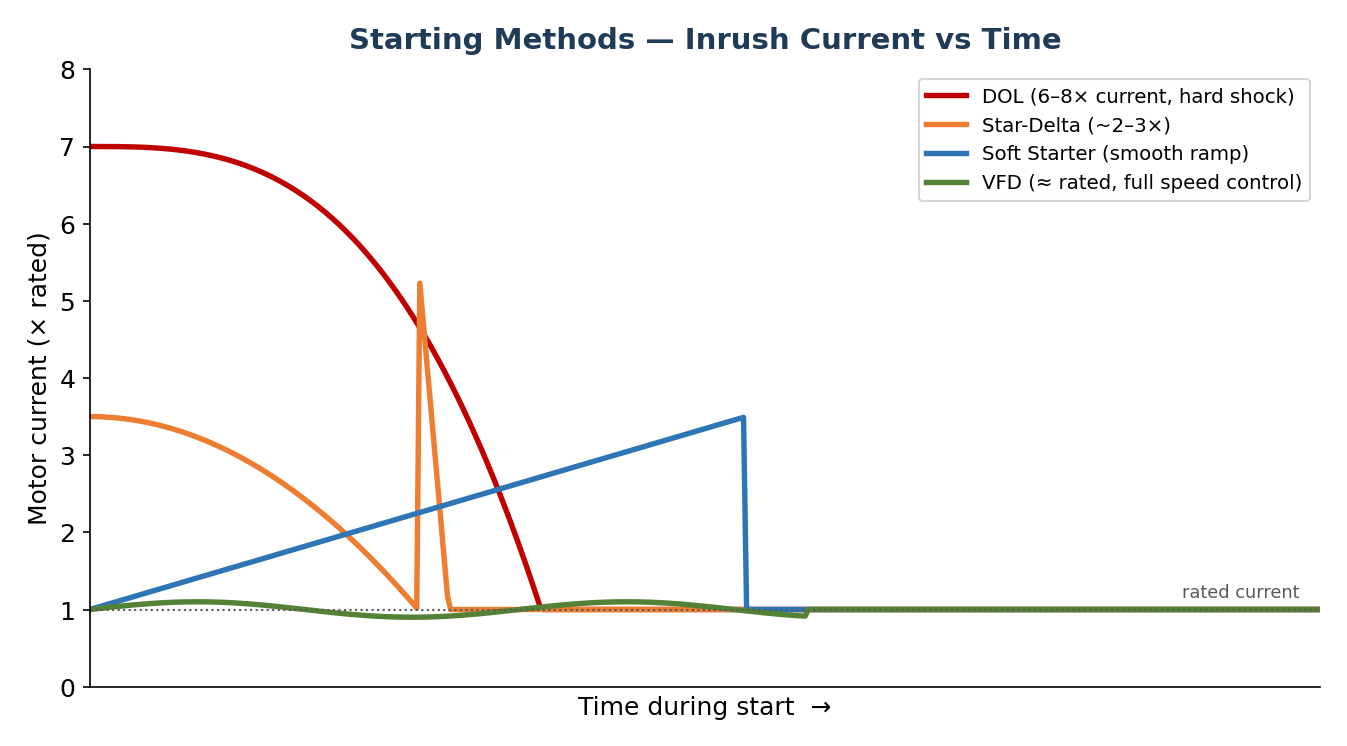
Figure 7.1 — How the four common methods shape the starting current.
7.2 DOL — Direct-On-Line
The simplest method: a contactor connects the motor straight to the supply. Advantages: lowest cost, simplest wiring, full starting torque, easy maintenance. Disadvantages: very high starting current and a hard mechanical shock. Typical use: small pumps, fans, compressors, and small conveyors. As a rough guide, motors below about 7.5–15 kW are often started DOL, but the limit depends on the electrical system and local rules.
7.3 Star-Delta starter
A classic industrial method: the motor starts connected in star (Y), which lowers the current, then switches to delta (Δ) once it is near speed to run at full power.
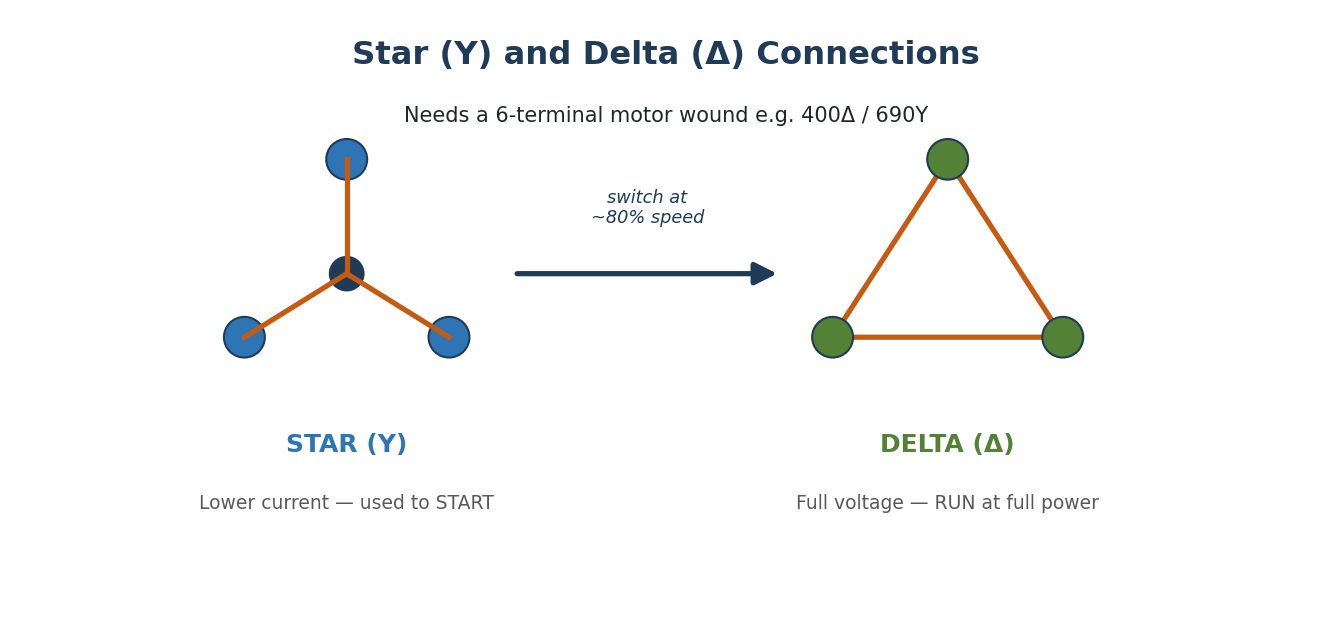
Figure 7.2 — Star for a gentle start, delta for full-power running.
Advantages: lower starting current, cheaper than a VFD, very widely used. Disadvantages: lower starting torque than DOL, and not suitable for every load. Applications: pumps, fans, blowers, and compressors with light starting loads.
WATCH OUT Star-delta is only possible if the motor is built for it: it must have six terminals brought out and the correct voltage relationship (for example 400 Δ / 690 Y). Confirm this before promising a star-delta start. And don't propose star-delta where the load needs high starting torque. |
7.4 Soft starter
A soft starter ramps the applied voltage up smoothly instead of slamming the motor to full voltage, so current and torque build gradually. Advantages: lower starting current, reduced mechanical stress, smooth acceleration (and usually smooth stopping), less wear on pumps and couplings. Key limitation: once the motor is at full speed the soft starter no longer controls speed — it improves starting and stopping only. Applications: pumps, compressors, conveyors, fans.
7.5 VFD — Variable Frequency Drive
A VFD is one of the most important technologies in modern industry. It varies the frequency supplied to the motor, and since induction-motor speed depends mainly on frequency and pole count, changing the frequency changes the speed. Drop 50 Hz toward 35 Hz and the motor slows; raise it (within limits) and it speeds up.
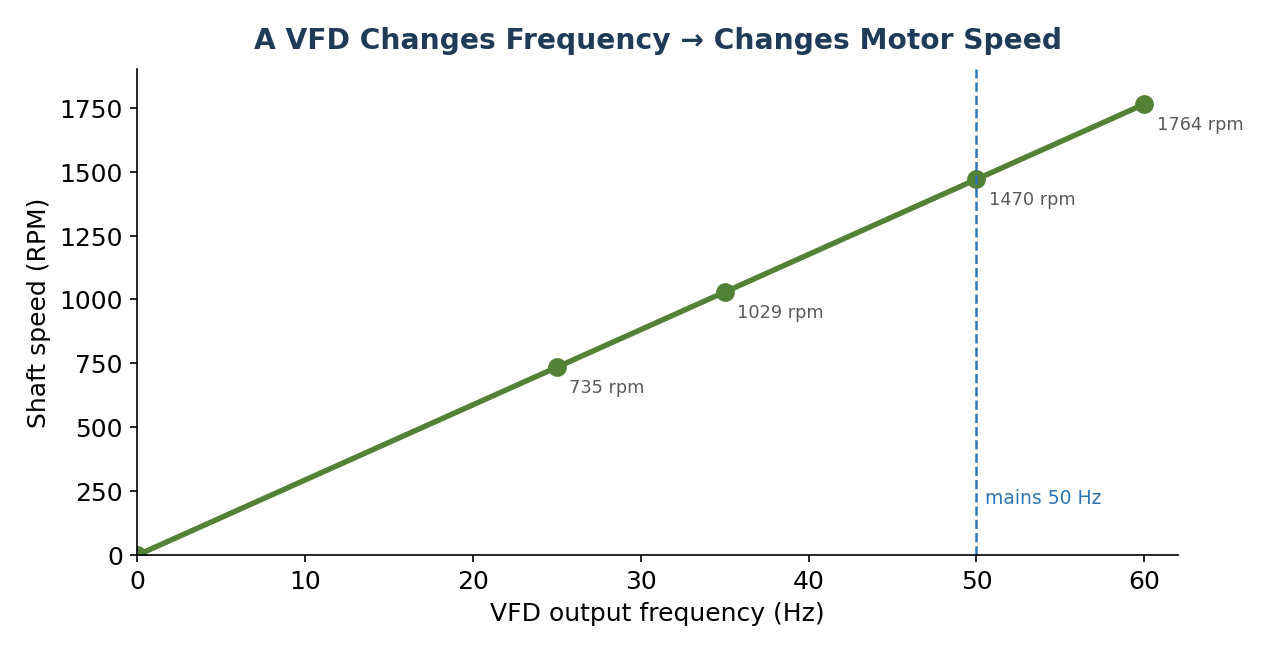
Figure 7.3 — A VFD sets the speed by setting the frequency.
Advantages: variable speed, large energy savings, smooth starting and stopping, and direct process control. Applications: HVAC, pumps, fans, conveyors, mixers, compressors.
WORKED EXAMPLE A water pump without a VFD always runs flat out, and flow is throttled with a valve — wasted energy. With a VFD the pump speed follows demand, and because pump power falls roughly with the cube of speed, modest speed reductions yield large energy savings. That energy story is often the strongest selling point. |
7.6 Choosing a method
Method |
Start current |
Speed control |
Best for |
DOL |
Very high (6–8×) |
None |
Small, robust loads |
Star-Delta |
Moderate (~2–3×) |
None |
Light-start pumps/fans, cost-sensitive |
Soft Starter |
Low, smooth ramp |
Start/stop only |
Reducing mechanical stress |
VFD |
≈ rated, controlled |
Full |
Energy saving and process control |
7.7 Inverter-duty motors
When a customer specifies “inverter duty” or “VFD duty,” the motor is designed to survive continuous drive operation. Such motors may add reinforced insulation, lower bearing-current risk (insulated bearings and/or a shaft-grounding ring), and forced ventilation (IC416) where the speed range demands it.
SALES TIP Do not assume every standard motor is fit for every VFD application. Check the manufacturer's voltage-stress and speed-range limits against the customer's drive and duty before you confirm suitability. |
7.8 The questions to ask
When the RFQ is silent on control, ask: will it start DOL? Is a star-delta starter used? Is a soft starter installed? Will it run on a VFD? Does the application need speed control? Is high starting torque required? These answers often decide whether a stock motor will do.
WATCH OUT Common control mistakes: assuming every motor starts DOL; ignoring VFD operation; forgetting to ask about speed control; assuming a motor can run continuously at very low speed without extra cooling; and proposing star-delta where high starting torque is essential. |
Knowledge Check — Chapter 7
Roughly how many times rated current does an induction motor draw during a DOL start?
What must a motor have for a star-delta start to be possible?
What does a soft starter control, and what does it NOT control?
How does a VFD change motor speed?
Name two features that may be added to an inverter-duty motor.
Why can running a standard TEFC motor slowly on a VFD cause overheating?